How Does a Variable Frequency Aquarium Pump Work and Save Energy?
- Share
- publisher
- David Yoon
- Issue Time
- Sep 30,2026
Summary
Learn how variable frequency aquarium pumps work, save energy, control water flow and reduce startup stress. Explore pump structure, performance curves and key operating precautions.
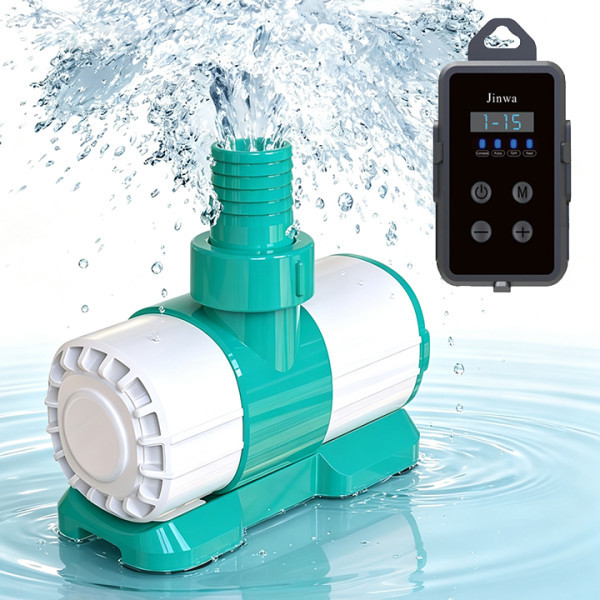
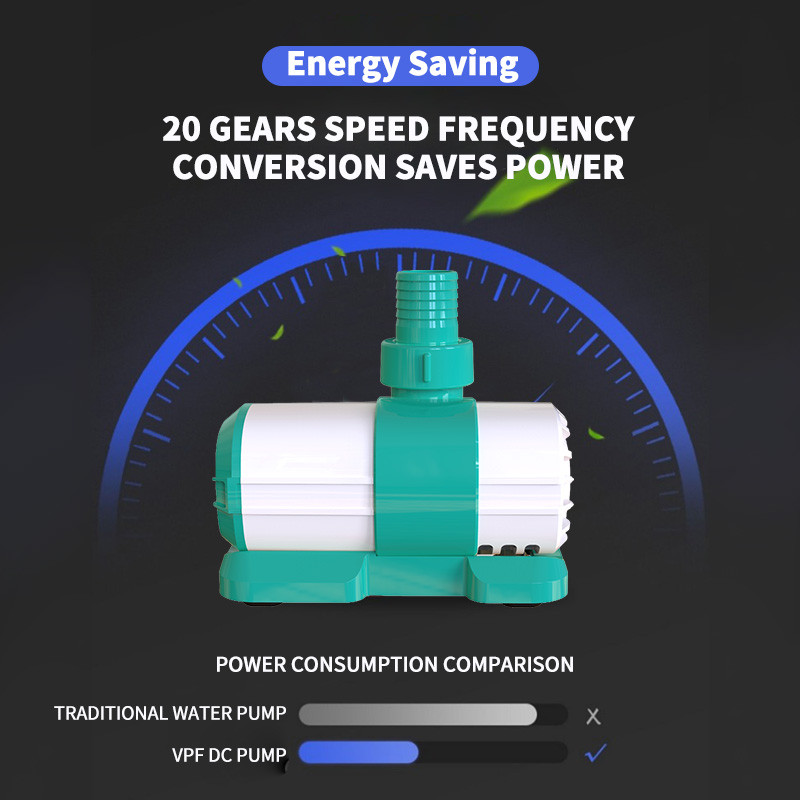
A variable frequency aquarium pump uses electronic speed control to adjust motor speed and pump output according to the circulation requirements of an aquarium system. By operating at an appropriate speed instead of continuously running at maximum speed, a variable-speed pump can provide flexible flow control and help reduce unnecessary energy consumption under suitable operating conditions.
This guide explains how variable frequency aquarium pumps work, why variable-speed control can improve energy efficiency, how pump performance changes with speed, and what users should know about pump structure, soft start, operation and maintenance.
What Is a Variable Frequency Aquarium Pump?
A variable frequency aquarium pump is an aquarium circulation pump equipped with electronic motor speed control. The controller adjusts the motor's operating conditions, allowing the pump to change its rotational speed and water output.
In simple terms:
Electronic Control → Motor Speed → Impeller Speed → Flow Rate & Head → Aquarium Water Circulation
Unlike a conventional fixed-speed pump, which generally operates at a relatively constant motor speed, a variable frequency aquarium pump can adjust its operating speed to better match the actual circulation requirements of the aquarium system.
This makes variable-speed pumps suitable for applications where water flow needs to be adjusted according to different operating conditions.
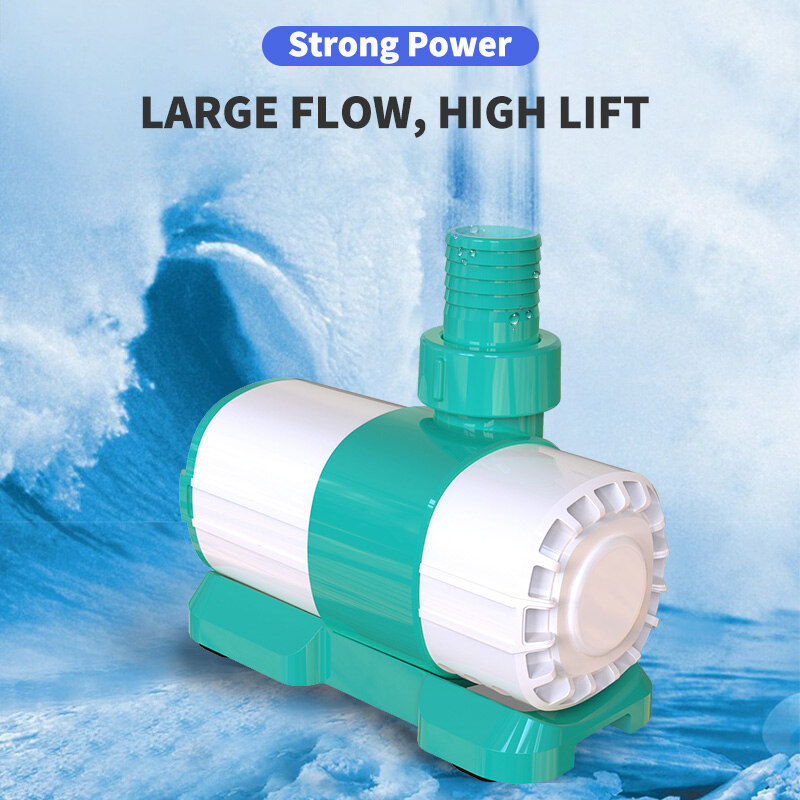
How Does a Variable Frequency Aquarium Pump Work?
The working principle can be understood in four basic steps.
1. Power Input
Electrical power is supplied to the pump's electronic control system.
2. Electronic Motor Control
The controller regulates the electrical input and motor operating conditions according to the selected speed or control setting.
3. Variable Motor Speed
The motor operates at different speeds according to the controller's output.
4. Adjustable Pump Output
Changes in motor and impeller speed change the pump's operating point, allowing the water flow and head to be adjusted.
In simple terms, the controller changes motor speed, and the change in motor speed adjusts the pump's water output.
For aquarium circulation systems, this allows users to select an appropriate flow level instead of always operating the pump at its maximum output.
How Does a Variable Frequency Aquarium Pump Save Energy?
The main energy-saving principle of variable-speed control is to reduce unnecessary pump output when the full capacity of the pump is not required.
For centrifugal pumps operating under similar conditions, the pump affinity laws indicate that:
Flow Rate: Q ∝ N
Head: H ∝ N²
Power: P ∝ N³
Where:
• Q = flow rate
• H = pump head
• P = pump shaft power
• N = rotational speed
This means that pump power can decrease approximately with the cube of rotational speed under suitable operating conditions.
When the required flow decreases, reducing motor speed can therefore result in a significant reduction in theoretical pump power.
Theoretical Energy-Saving Example
Consider a pump motor with a rated power of 55 W.
If the pump operates at approximately 80% of its original speed, the theoretical power relationship is:
55 × 0.8³ = 28.16 W
The theoretical power reduction is approximately 48.8%.
If the pump operates at approximately 50% of its original speed:
55 × 0.5³ = 6.875 W
The theoretical power reduction is approximately 87.5%.
These values are theoretical calculations based on the pump affinity laws. They should not be interpreted as guaranteed electrical energy savings for every aquarium pump. Actual power consumption depends on motor efficiency, controller efficiency, hydraulic resistance, pump design and the actual operating point.
The practical benefit of variable-speed control is that the pump can operate closer to the flow requirement of the aquarium system instead of continuously operating at full speed.
Variable Frequency Pump vs. Fixed-Speed Aquarium Pump
The key difference between variable frequency and conventional fixed-speed aquarium pumps is how motor speed and water flow are controlled.
| Feature | Variable Frequency Aquarium Pump | Fixed-Speed Aquarium Pump |
| Motor speed | Adjustable | Generally fixed |
| Flow control | Electronic speed control | Often controlled by hydraulic resistance or throttling |
Pump output | Adjustable | Relatively fixed |
Startup | Soft start may be available | Depends on motor and starting method |
Flow flexibility | High | Limited |
| Energy efficiency | Can reduce unnecessary output | May continue operating at higher speed than required |
A fixed-speed aquarium pump is not necessarily inefficient. Its actual efficiency depends on the pump design and operating point.
However, when an aquarium system frequently requires less than the pump's maximum capacity, variable-speed control can reduce pump speed and output to better match the actual circulation requirement.
With a fixed-speed pump, reducing flow by partially closing a valve can dissipate some available hydraulic energy through the restriction. Variable-speed control can instead reduce the pump's output at the source by reducing motor speed.
Internal Structure of a Variable Frequency Aquarium Pump
Motor
The motor converts electrical energy into mechanical rotation.
Rotor and Impeller
The rotating assembly transfers mechanical energy to the water and generates flow.
Controller
The electronic controller regulates motor operation and allows the pump speed to be adjusted.
Pump Housing
The pump housing directs water through the inlet and outlet passages while protecting the internal components.
Filter Basket or Inlet Protection
The inlet protection system helps prevent larger debris from entering the pump and reaching the impeller.
Power Cable
The power cable supplies electrical power to the pump system and should be suitable for the specified operating environment.
Variable Frequency Aquarium Pump Performance Curve
A pump performance curve shows the relationship between flow rate and pump head under specified operating conditions.
Typically:
• X-axis: Flow Rate
• Y-axis: Head
Different motor speeds can produce different pump performance curves. When motor speed changes, both the available flow and head can change.
When selecting a variable frequency aquarium pump, users should therefore consider the actual system operating point rather than selecting a pump based only on its maximum flow rate.
Actual pump performance can be affected by:
• Pipe length
• Pipe diameter
• Elbows and fittings
• Filters
• Valves
• Vertical lift
• UV sterilizers
• Other equipment in the circulation system
The performance curve should be used together with the hydraulic requirements of the complete aquarium system.
How Does Soft Start Work?
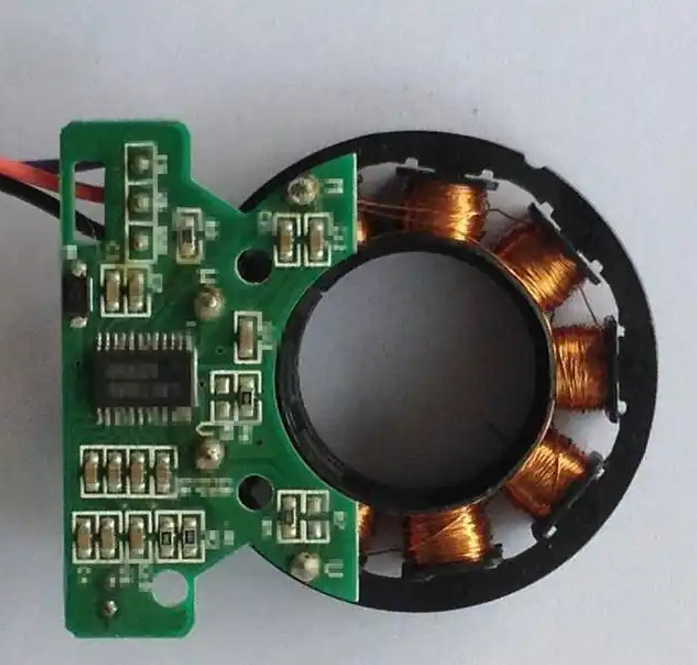
Many variable-speed aquarium pumps can incorporate a soft-start function.
Instead of immediately accelerating the motor to full operating speed, the controller gradually increases motor speed during startup.
Soft start can help:
• Reduce startup current
• Reduce sudden torque
• Provide smoother water flow
• Reduce mechanical stress
• Reduce hydraulic shock
• Improve startup control
Soft start should primarily be understood as a function for controlling startup conditions and reducing electrical and mechanical stress. It should not be considered the main source of continuous operating energy savings.
Power Factor and Energy Efficiency
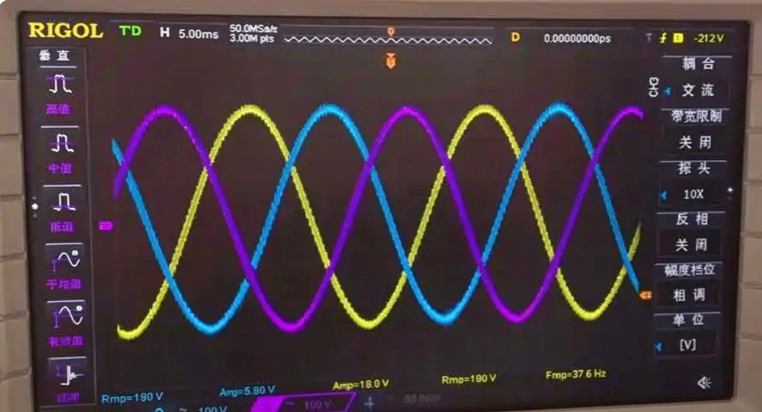
For AC electrical systems, power factor describes the relationship between real power and apparent power.
The basic relationships are:
P = S × cos φ
Q = S × sin φ
Where:
• P = real power
• Q = reactive power
• S = apparent power
• cos φ = power factor
A higher power factor means that a greater proportion of apparent power represents real power.
Depending on the motor and controller design, electronic power conversion and filtering can improve the power factor seen by the electrical supply and reduce reactive current.
However, improved power factor should not be interpreted as an equivalent percentage reduction in actual electricity consumption. Real energy consumption depends primarily on the motor, controller, pump efficiency and operating conditions.
How to Operate a Variable Frequency Aquarium Pump Safely
Correct operation and regular maintenance are important for reliable aquarium pump performance.
Check the Rated Voltage
Before use, check that the voltage marked on the pump matches the actual power supply voltage.
If the pump is designed for a specific wide input-voltage range, operate it only within the voltage range specified by the manufacturer.
Disconnect Power Before Maintenance
Always unplug the pump and completely disconnect it from the power supply before:
• Installing the pump
• Removing the pump
• Inspecting the pump
• Cleaning the pump
• Servicing internal components
This is especially important when working with equipment installed in or near water.
Clean the Rotor and Impeller Regularly
Algae, calcium deposits, organic material and other debris can accumulate around the rotor and impeller.
Regular cleaning can help maintain proper pump performance and water flow.
Clean the Filter Basket and Filter Media
The filter basket and filter media should be cleaned regularly to maintain adequate water intake and effective filtration.
The required cleaning frequency depends on the amount of debris, water quality, aquarium size and operating conditions.
Protect the Pump Housing
Inspect the pump housing regularly.
If the housing is cracked, damaged or otherwise compromised, stop using the pump and have it inspected or replaced according to the manufacturer's instructions.
Maintain Adequate Submersion
The pump should be sufficiently submerged during operation according to the manufacturer's installation requirements.
For products specifically designed for a minimum submersion depth of 0.4 m, users should maintain at least the specified water depth during operation.
Always follow the installation instructions for the specific pump model.
Inspect the Power Cable
The power cable is an important safety component because it may remain exposed to water for long periods.
In marine aquariums, the cable may also be exposed to saltwater. Prolonged exposure to moisture, saltwater, chemicals, mechanical stress and aging can affect cable insulation.
Inspect the cable regularly for:
• Cracks
• Hardening
• Cuts
• Abrasion
• Exposed conductors
• Other visible damage
If the cable is damaged, stop using the pump and replace or service it according to the manufacturer's requirements and applicable electrical safety standards.
A fixed replacement period such as five or seven years should not be applied universally. The actual service life depends on cable construction, water conditions, operating environment, usage frequency and product design.
How to Select the Right Variable Frequency Aquarium Pump
Selecting the correct pump requires more than looking at the maximum flow rate.
1. Flow Rate
Determine the required circulation flow rate for the aquarium system.
2. Head Height
Consider the vertical distance that the pump needs to overcome.
3. System Resistance
Consider pressure losses caused by:
• Pipes
• Elbows
• Filters
• Valves
• UV equipment
• Other fittings and equipment
4. Water Type
For marine aquariums, consider whether the pump materials, seals, cable and other components are suitable for saltwater applications.
5. Continuous-Duty Requirements
Commercial aquariums, public aquariums and professional life-support systems may require pumps designed for continuous operation.
6. Voltage and Frequency
Check the required electrical specification, such as:
110–120 V / 60 Hz
220–240 V / 50 Hz
Always select a pump according to the complete system operating requirements and the manufacturer's specifications.
Variable Frequency Aquarium Pump Applications
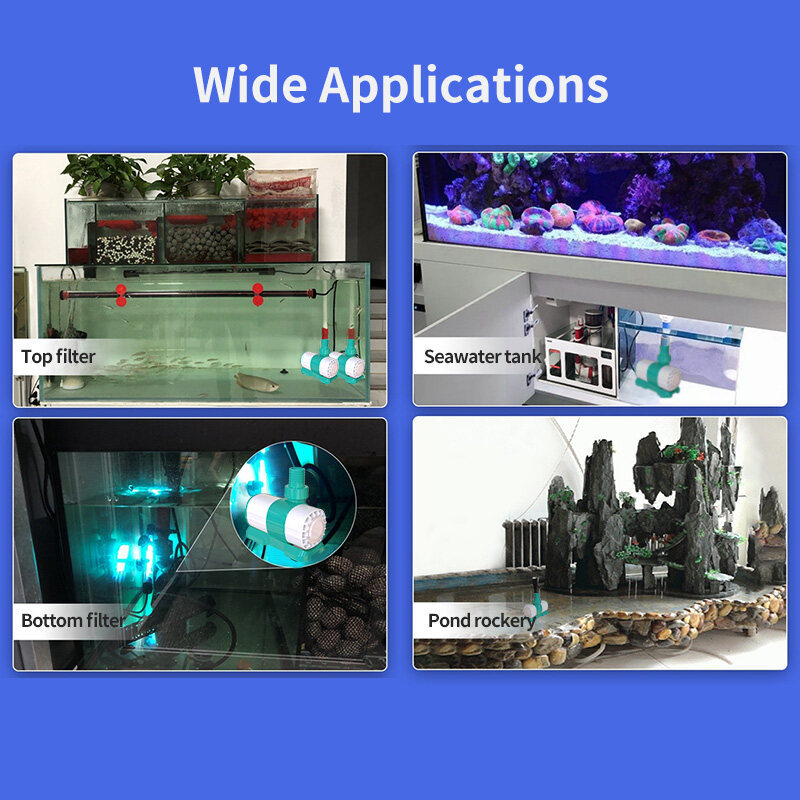
Variable frequency aquarium pumps can be used in a wide range of aquarium circulation applications, including:
• Freshwater aquariums
• Marine aquariums
• Reef aquariums
• Commercial aquariums
• Public aquariums
• Retail aquarium systems
• Aquarium filtration systems
• Custom aquarium installations
• Aquatic life-support systems
The appropriate pump configuration depends on the required flow, head, water type, operating schedule and system design.
Frequently Asked Questions
What is a variable frequency aquarium pump?
A variable frequency aquarium pump is a pump equipped with electronic motor speed control. The controller can adjust motor speed, allowing the pump's water output to be adjusted according to the requirements of the aquarium circulation system.
How does a variable frequency aquarium pump save energy?
It can reduce energy consumption by lowering motor speed when the aquarium system does not require the pump's full output. For centrifugal pumps operating under similar conditions, pump power varies approximately with the cube of rotational speed.
Is a variable frequency aquarium pump more energy efficient than a fixed-speed pump?
It can provide energy-saving benefits when the aquarium system frequently operates below the pump's maximum capacity. Actual efficiency depends on the complete pump, motor, controller and hydraulic system.
Does reducing pump speed reduce flow and head?
Yes. Under similar operating conditions, pump flow is approximately proportional to rotational speed, while pump head is approximately proportional to the square of rotational speed.
What is the difference between a variable frequency pump and a fixed-speed pump?
A variable frequency pump can electronically adjust motor speed and pump output. A fixed-speed pump generally operates at a relatively constant motor speed, with flow often controlled through system resistance or hydraulic throttling.
Can a variable frequency aquarium pump run continuously?
Some pumps are designed for continuous-duty operation, while others may have different operating requirements. Always check the specific product's continuous-duty rating and manufacturer's instructions.
How often should an aquarium pump be cleaned?
There is no universal cleaning interval. Cleaning frequency depends on water quality, debris levels, algae growth, operating hours and the specific pump design. The rotor, impeller, filter basket and inlet protection should be inspected regularly.
Can a variable frequency aquarium pump be used in saltwater?
Some variable frequency aquarium pumps are designed for marine and saltwater applications, while others are intended only for freshwater. Always confirm that the pump's materials and electrical components are suitable for the intended water environment.
Conclusion
A variable frequency aquarium pump uses electronic speed control to adjust motor speed and pump output according to the circulation requirements of an aquarium system.
Its main advantages can include adjustable flow control, lower unnecessary energy consumption under suitable operating conditions, smoother startup and more flexible operation.
The energy-saving principle is primarily based on reducing pump speed when full pump capacity is not required. For centrifugal pumps operating under similar conditions, the affinity laws show that flow, head and power have different relationships with rotational speed.
For reliable operation, users should select the pump according to the required flow, head, water type, electrical specification and complete system operating point. Regular cleaning and inspection of the rotor, impeller, filter system, pump housing and power cable are also important for safe and reliable operation.
Technical Note
The technical relationships and energy-saving examples in this article are based on general pump affinity-law principles and theoretical calculations. Actual pump performance and electrical energy consumption vary according to pump design, motor efficiency, controller efficiency, hydraulic conditions and operating conditions. Product-specific specifications should always take precedence over general technical guidance.