How to Choose an OEM Pump Manufacturer in China | Jinwa Aquatics
- Share
- publisher
- David Yoon
- Issue Time
- Oct 24,2026
Summary
Learn how to choose a reliable OEM pump manufacturer in China. Compare factory capabilities, pump quality, customization, samples, costs, and supply reliability.
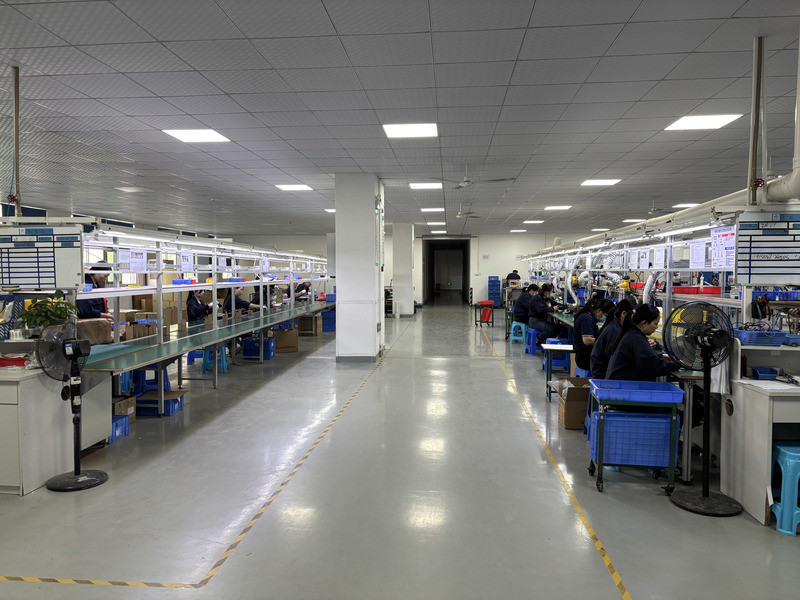
How do you choose a reliable OEM pump manufacturer in China that can deliver consistent product quality, competitive pricing, technical customization, and dependable long-term supply?
For aquarium brands, importers, wholesalers, distributors, and pond equipment suppliers, choosing an OEM pump manufacturer involves much more than comparing unit prices. You need to verify the supplier's manufacturing capabilities, engineering expertise, quality control processes, customization options, production capacity, and after-sales support.
This is especially important when sourcing aquarium pumps and pond pumps, where flow rate, head pressure, energy consumption, operating noise, waterproof performance, controller compatibility, and freshwater or saltwater suitability directly affect product performance.
Evaluate six essential factors: factory capabilities, technical expertise, quality control, OEM/ODM customization, total procurement cost, and long-term supply reliability. Verify these factors through documentation, sample testing, and, where appropriate, a pilot order before committing to large-volume production.
TL;DR: Six Factors to Evaluate When Choosing an OEM Pump Manufacturer
| Evaluation Factor | What Should You Verify? |
|---|---|
| Manufacturing capabilities | Does the supplier operate real production facilities and have established manufacturing processes? |
| Technical expertise | Can it meet your flow, head, motor, controller, and structural requirements? |
| Quality control | Are incoming materials, production processes, and finished products inspected and tested? |
| OEM/ODM customization | Can it customize branding, appearance, controllers, accessories, and packaging? |
| Total procurement cost | Are tooling, samples, MOQ, shipping, and after-sales costs clearly specified? |
| Long-term supply reliability | Can it maintain consistent quality, delivery schedules, spare parts, and technical support? |
1. What Is an OEM Pump Manufacturer? What Is the Difference Between OEM and ODM?
An OEM (Original Equipment Manufacturer) typically manufactures products according to a customer's specifications or agreed product requirements. The customer then sells the products under its own brand.
ODM (Original Design Manufacturer) generally involves a manufacturer providing an existing product design or participating in product development for sale under the customer's brand.
For aquarium pump and pond pump buyers, the actual scope of each arrangement depends on the manufacturer's capabilities and the agreement between both parties.
| Comparison | OEM Pump Manufacturing | ODM Pump Manufacturing |
|---|---|---|
| Product design | Manufacturing to customer specifications or an existing platform | Using the manufacturer's design or jointly developing a product |
| Branding | Custom branding may be available | Custom branding may be available |
| Appearance and packaging | Customization depends on the agreed scope | Customization depends on the agreed scope |
| Tooling and development | Depends on the product platform and required modifications | May require additional engineering and tooling |
| Best suited for | Brands with established product specifications | Brands seeking differentiated products or development support |
For aquarium brands entering a new market, customizing an existing pump platform through OEM manufacturing can reduce development work. Projects requiring a unique water-flow control system, special installation structure, or dedicated controller may require additional ODM engineering.
2. How Do You Verify That a China Pump Manufacturer Is a Real Factory?
Before evaluating pricing, establish whether a potential supplier is a manufacturer, a trading company, or a supplier coordinating production across subcontractors.
Trading companies can be suitable partners for some purchasing projects. However, if your project requires long-term OEM customization, engineering support, and consistent mass production, you should understand which manufacturing processes the supplier controls directly.
2.1 What Manufacturing Capabilities Should You Check?
For aquarium pumps and pond pumps, review the following areas:
- Research and engineering: Does the supplier have product designers, structural engineers, or motor and controller specialists?
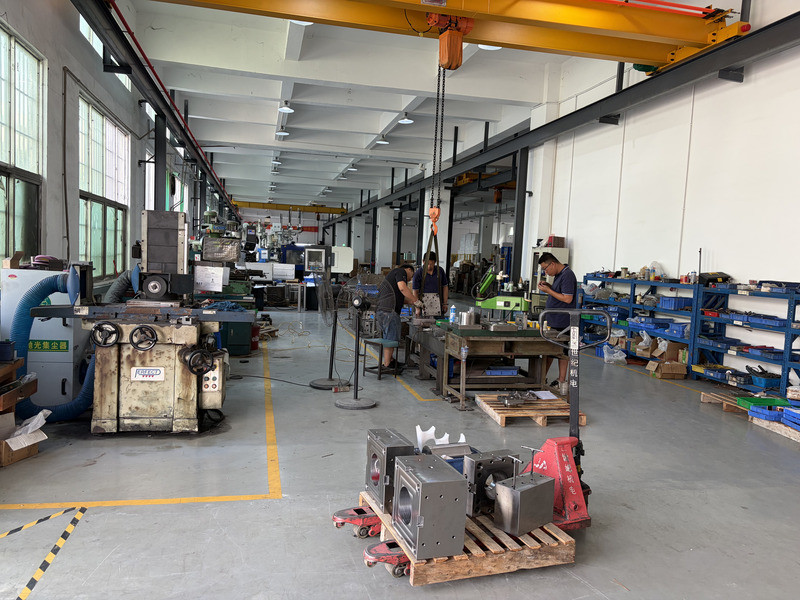
- Tooling and injection molding: Does it have in-house tooling and injection molding capabilities, or a clearly managed outsourcing process?
- Motors and controllers: Can it explain the sources, specifications, and quality controls for critical components?
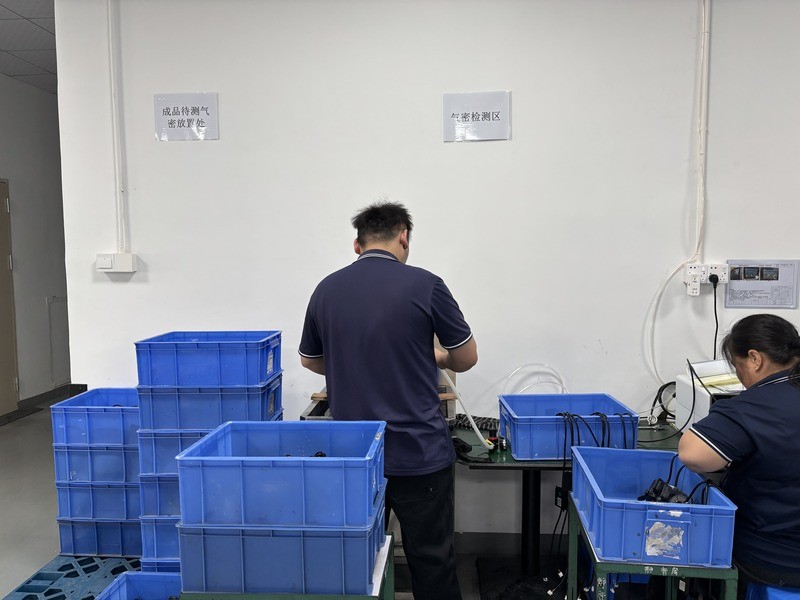
- Assembly and testing: Are assembly, performance testing, waterproof verification, and finished-product inspection carried out under defined procedures?
- Mass production: Can it demonstrate realistic production capacity, scheduling processes, and order tracking?
Do not rely exclusively on factory photographs or building size. Ask to see production equipment, manufacturing workflows, relevant test records, and the actual products intended for your project.
2.2 How Can You Verify a Manufacturer's Quality Management System?
Ask the supplier for applicable quality management system certificates and verify their validity, certification scope, and issuing organization.
The International Organization for Standardization (ISO) explains that ISO 9001 provides a framework for quality management systems, including process management, performance evaluation, and continual improvement.
Reference: ISO — ISO 9001 Explained.
3. Why Is Pump Engineering Expertise More Important Than the Lowest Price?
For aquarium and pond pumps, technical suitability often has a greater impact on long-term purchasing value than the quoted unit price alone.
For example, a pump advertised with a high maximum flow rate may deliver insufficient water flow at the actual operating head. It may also be incompatible with the filtration system, pipework, controller, or available installation space.
The U.S. Department of Energy provides pump-system resources addressing appropriate pump selection, variable-speed operation, and system efficiency.
Reference: U.S. Department of Energy — Pump Systems.
3.1 What Technical Specifications Should You Evaluate?
| Technical Parameter | Why It Matters | What to Request |
|---|---|---|
| Flow rate | Determines water circulation and delivery capacity | Flow data under specified operating conditions |
| Head | Affects the pump's ability to overcome elevation and system resistance | Head-flow performance curve |
| Power consumption | Influences operating costs and product positioning | Input power and test conditions |
| Motor and control system | Affect speed adjustment, noise, and operating characteristics | Motor specifications and controller documentation |
| Waterproofing and electrical safety | Affect suitability for submerged or wet environments | Applicable test records and certification documents |
| Materials and corrosion resistance | Affect compatibility with freshwater, saltwater, and other operating environments | Material specifications and application limits |
| Noise and durability | Affect customer experience, reliability, and maintenance costs | Noise test methods and durability test records |
3.2 Why Should You Never Compare Pumps by Maximum Flow Rate Alone?
A pump's maximum flow rate is not necessarily the flow rate it will deliver under every installation condition.
Ask the manufacturer for a head-flow curve and verify the model, test conditions, and operating settings associated with the curve. For DC variable-speed pumps, confirm the speed setting or control level used during testing.
In an aquarium system, a return pump must overcome resistance from pipes, elbows, filtration equipment, and vertical lift. Pond systems may also involve filters, waterfalls, and branched pipework.
The correct selection method is to evaluate the pump at the intended operating point rather than comparing maximum flow figures alone.
4. How Do You Determine Whether an OEM Pump Manufacturer Can Meet Your Customization Requirements?
OEM customization should extend beyond printing a logo or changing a package. For private-label projects, confirm which engineering, performance, appearance, and accessory modifications the manufacturer can support.
4.1 What Customization Options Are Available for Aquarium Pumps?
Depending on the manufacturer's capabilities and the selected platform, aquarium pump OEM projects may include:
- Product types: DC return pumps, circulation pumps, protein skimmer pumps, wavemakers, and bottom-intake pumps.
- Performance specifications: Flow rate, head, power consumption, and operating modes.
- Control systems: Controller appearance, button layout, speed adjustment, and supported operating modes.
- Mechanical design: Housing, inlet structure, outlet connections, and mounting arrangements.
- Brand identity: Logo, product labels, instruction manuals, and retail packaging.
- Market requirements: Voltage, plug type, cable configuration, and applicable regulatory documentation.
The available options depend on the existing product platform, engineering feasibility, development costs, and minimum order quantity (MOQ).
4.2 What Should You Consider When Customizing Pond Pumps?
Pond pump projects often require particular attention to:
- Operating flow and head requirements for pond circulation or waterfalls.
- Suitability for the intended continuous operating conditions.
- Inlet design and the specified particle-handling requirements.
- Compatibility with filters, pipework, and outlet connections.
- Suitability for freshwater environments, outdoor installation, and seasonal use.
- Options for product appearance, branding, accessories, and packaging.
If the application involves solid particles, confirm the permitted particle size and relevant test conditions. Do not assume that a pump can handle solids based on its product name alone.
4.3 How Do You Confirm OEM Development Costs and MOQ?
Before requesting a formal quotation, separate the potential costs into the following categories:
- Samples of existing pump models.
- Logo, color, packaging, and accessory customization.
- New tooling or mechanical development.
- Controller or electrical design modifications.
- Testing, certification, and other required verification.
- Mass-production unit prices, MOQ, and lead times.
Also confirm tooling ownership, intellectual property rights, confidentiality requirements, and whether additional development fees apply to repeat orders.
5. How Should You Test Pump Samples Before Mass Production?
Sample testing is a critical verification step before committing to mass production. A pump that starts and runs successfully for a few minutes has not necessarily demonstrated that it meets your performance, safety, or durability requirements.
Step 1: Confirm the Specifications and Test Criteria
Before receiving samples, confirm the model, rated voltage, power consumption, flow rate, head, control method, connection dimensions, and intended operating environment.
For an OEM project, prepare a written specification sheet that both parties can use to evaluate samples and subsequent production batches.
Step 2: Test the Pump Under Real Operating Conditions
Aquarium pump buyers should evaluate:
- Actual flow rate at the intended operating head.
- Performance at different speed settings or operating modes.
- Noise, vibration, and temperature rise.
- Operation under the intended water conditions.
- Compatibility with controllers, cables, and accessories.
Pond pump buyers should also test performance under the actual installation conditions, including filters, pipework, and waterfall loads where applicable.
Step 3: Verify Waterproofing, Electrical Safety, and Durability
Depending on the product design and destination market, verify applicable waterproofing tests, electrical safety requirements, durability tests, and relevant certifications.
For pumps intended for long-term or continuous operation, establish an appropriate endurance testing plan instead of estimating service life from a brief operating test.
Step 4: Approve the Sample and Establish Production Standards
Once the sample passes the agreed tests, retain an approved reference sample, product specification, test records, and appearance standards.
The mass-production agreement should specify whether changes to critical components, controllers, materials, or manufacturing processes require prior notification and approval.
6. How Do You Compare OEM Pump Prices and Total Procurement Costs in China?
The lowest quotation does not always represent the lowest total cost. Private-label projects may also involve development, packaging, logistics, quality issues, and after-sales expenses.
Compare the following cost categories:
| Cost Category | What to Confirm |
|---|---|
| Unit purchase price | Model, configuration, order quantity, and trade terms |
| Samples and development | Samples, tooling, design, and controller development |
| Packaging and customization | Retail boxes, manuals, labels, logos, and accessories |
| Logistics and import costs | Freight, insurance, duties, and applicable import charges |
| Quality-related costs | Inspection, rework, returns, and failure handling |
| After-sales support | Spare parts, warranty coverage, repairs, and technical assistance |
Request comparable quotations from at least two or three suppliers that meet your basic technical requirements.
Price comparisons are meaningful only when the product models, configurations, test criteria, packaging, and trade terms are aligned.
7. How Do You Evaluate Production Capacity, Lead Times, and Long-Term Supply Reliability?
For importers, distributors, and project integrators, reliable repeat deliveries are just as important as the initial quotation.
Before placing an order, confirm:
- Sample availability or product development lead time.
- Mass-production lead time and the conditions under which it begins.
- Monthly production capacity and current order commitments.
- Lead times for critical components.
- Communication and escalation procedures for production issues.
- Spare parts availability, warranty terms, and technical support.
- Capacity to accommodate future increases in order volume.
For customized products, the agreed lead time should account for specification approval, sample approval, packaging approval, and any required advance payment.
Do not rely solely on a supplier's stated production capacity. Request relevant production schedules, capacity explanations, or reasonable evidence of previous delivery performance.
8. How Should Different Buyers Choose an OEM Pump Manufacturer?
Different customers have different purchasing priorities. Your evaluation criteria should reflect the product application and business model.
Scenario 1: An Aquarium Brand Developing Its Own DC Return Pump
The objective is not simply to purchase an existing pump, but to build a differentiated product line under a private label.
Prioritize variable-speed control, flow and head performance, noise characteristics, controller customization, branded packaging, product consistency, and spare parts support.
Scenario 2: An Importer or Wholesaler Sourcing Aquarium Pumps for Resale
These buyers often prioritize stable supply, competitive volume pricing, reasonable MOQ, consistent product quality, and a suitable range of models.
Consider starting with established pump models and limited customization. Validate the supplier through sample testing and a pilot order before expanding the product range.
Scenario 3: A Pond Equipment Supplier Sourcing Pumps for Koi Ponds or Water Features
Projects typically require pump selection based on actual flow, head, pipework, and filtration requirements.
Prioritize operating-point performance, suitability for the intended operating conditions, connection compatibility, outdoor-use requirements, spare parts availability, and project delivery support.
Scenario 4: An Aquarium Equipment Manufacturer Seeking a Long-Term Pump Supplier
If the pump will be integrated into an aquarium, filtration system, or another piece of equipment, evaluate installation dimensions, electrical interfaces, controller compatibility, engineering change management, and repeat-order consistency.
For these projects, a supplier capable of supporting engineering validation, design changes, and production quality management can be more suitable than a supplier offering only standard catalog products.
9. Why Consider Jinwa Aquatics for OEM/ODM Aquarium and Pond Pumps?
Jinwa Aquatics is a Shenzhen, China-based aquarium and pond pump manufacturer that has specialized in pump technology and related products since 2009.
Jinwa supports OEM/ODM projects for brands, importers, wholesalers, and system integrators sourcing aquarium pumps and pond pumps. Depending on the project, cooperation can begin with an existing product platform and proceed to customization of performance specifications, controllers, appearance, connections, branding, and packaging.
Relevant product categories include:
- DC Aquarium Return Pumps
- DC Aquarium Circulation Pumps
- DC Protein Skimmer Pumps
- DC Wavemakers
- Variable-Speed Pond Pumps
- Asynchronous Pond Pumps
For businesses developing private-label products or seeking a long-term manufacturing partner, providing the intended application, flow and head requirements, control preferences, target market, and estimated order quantity can help determine a suitable product platform and customization scope.
Learn more about Jinwa Aquatics OEM/ODM services and the Jinwa Aquatics FAQ.
For any specific project, confirm the applicable product specifications, sample performance, certification documents, delivery conditions, and quality requirements before placing an order.
10. Frequently Asked Questions About Choosing an OEM Pump Manufacturer in China
Q1. How can I verify whether an OEM pump manufacturer in China is reliable?
Check the company's legal identity, actual manufacturing capabilities, engineering team, quality management procedures, relevant certifications, and product testing records. Then validate its performance through sample testing and, where appropriate, a pilot order. Do not rely solely on website claims or quotations.
Q2. What customization services do Chinese OEM pump manufacturers offer?
Services vary by manufacturer but may include logos, packaging, colors, accessories, power configurations, controllers, and selected mechanical modifications. New tooling, dedicated motors, or controller development may involve additional engineering costs and higher MOQs.
Q3. What is the difference between OEM and ODM pumps, and which is right for my brand?
OEM is generally suitable for buyers with established product specifications or a defined product concept who want to sell under their own brand. ODM is generally suitable for brands seeking an existing manufacturer design or collaborative product development. Evaluate OEM for established products and ODM when greater product differentiation is required.
Q4. Which technical specifications should I check when buying OEM aquarium pumps?
Review flow rate, head, power consumption, noise, control methods, waterproofing, material compatibility, and operating requirements. For DC variable-speed pumps, also verify controller functions, performance at different settings, and the test conditions associated with the head-flow curve.
Q5. How can I determine whether an OEM pump quotation is competitive?
Align the model, configuration, order quantity, packaging, testing requirements, and trade terms before comparing prices. Include development, logistics, and after-sales costs in the evaluation. A lower unit price does not necessarily offer better overall procurement value if essential testing, quality control, or customization support is missing.
Q6. What are the typical MOQ and lead time for OEM pumps?
MOQ and lead time depend on the model, stock availability, customization requirements, order quantity, and production schedule. Logo or packaging customization on an existing platform may have different requirements from new tooling or controller development. Request written confirmation of the MOQ, quotation, and estimated lead time.
Q7. Should I order samples before purchasing OEM pumps in bulk?
For a new supplier, new model, or important OEM project, sample testing is recommended. Verify performance under actual operating conditions, controller compatibility, waterproofing, noise, and other critical requirements before approving mass production.
Q8. How can I verify whether an OEM pump meets requirements in the US, Europe, or Australia?
Identify the destination country, intended application, voltage, and plug requirements first. Then verify the applicable product safety standards, certification or compliance requirements, labeling, manuals, and import documentation. Requirements should be assessed for the specific product and market rather than inferred from a supplier's unrelated certificates.
Q9. Can an OEM pump manufacturer provide long-term after-sales and spare parts support?
Before starting cooperation, agree on warranty duration, failure assessment procedures, spare parts availability, response expectations, and responsibility for quality issues. For pumps intended for long-term resale, also clarify critical component change notifications and support arrangements after a product is discontinued.
Q10. What information should I prepare before requesting an OEM pump quotation?
Prepare the intended application, target flow and head, rated voltage, control requirements, installation dimensions, freshwater or saltwater requirements, destination market, branding needs, and estimated order quantity. If you do not have complete specifications, share product photos, the application, and a reference model so the manufacturer can help assess suitable options.
11. Conclusion: How Can You Find the Right OEM Pump Manufacturer in China?
Choosing an OEM pump manufacturer in China is not simply about finding the lowest price. It is about finding a manufacturing partner that can consistently meet your product specifications, quality standards, customization requirements, and delivery schedules.
Follow this practical process:
- Define your application and target market.
- Shortlist manufacturers with relevant product experience.
- Verify manufacturing, engineering, quality, and customization capabilities.
- Compare quotations and total procurement costs.
- Test samples against agreed performance requirements.
- Establish written specifications, quality standards, delivery terms, and warranty conditions.
- Validate the supplier through a pilot order before scaling up.
Looking for an OEM Aquarium Pump or Pond Pump Manufacturer?
If you are sourcing OEM aquarium pumps or pond pumps in China, contact Jinwa Aquatics with your application, target specifications, customization requirements, and purchasing plan.
Our team can discuss suitable product platforms and potential OEM/ODM solutions for your project.
Request a Quote →References and Industry Resources
- International Organization for Standardization (ISO). ISO 9001 Explained — Quality management systems, process control, and continual improvement.
- U.S. Department of Energy. Pump Systems — Pump system efficiency, selection, and operating optimization.
- Xylem / Flygt. Pump Testing — Reference information on pump flow, head, input power, and acceptance testing practices.